
Shoco
Quick Facts About Shoco
- Scientific Name is Athene cunicularia arubensis
- Endemic subspecies (Found only on Aruba)
- The size is ~ 25 cm (slighly larger than a blackbird)
- ~ 200 breeding pairs
- Shoco is a national symbol since 2012
- The best time to see them is early morning or late afternoon
Borrowing Owl Aruba
If you visit Aruba and hear locals talk about the shoco, they are referring to the islands beloved burrowing owl, a small, long legged owl with striking yellow eyes that has become a national symbol of Aruba. The Shoco is a subspecies of the burrowing owl, endemic to Aruba, meaning it exists nowwhere else on earth. Unllike most owls that nest in trees, shocos live and nest underground in burrows, which is why they are often spotted standing tall on their long legs near sandy areas, open fields, and even golf courses. At roughly 25 centimeters in length, they are slighly larger than their Dutch relatives and hunt primarily on the ground, feeding on lizards, mice and large insects.
These little tiny birds can only be found in Aruba
The Shoco bird is not just another bird, its woven into Aruba’s identity. In February 2012, it was officially declared a national symbol and now appears on Aruba’s postal stamps and currency. For Arubas, the shoco represents the island’s unique natural heritage.
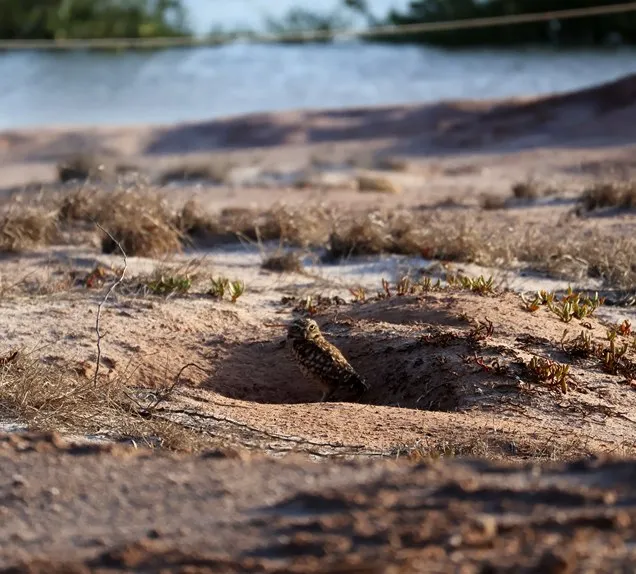
Why the Shoco Matters to Aruba
The Shoco is not just another bird, its woven into Aruba’s identity. In February 2012, it was officially declared a national symbol and now appears on Aruba’s postal stamps and currency. For Arubans, the shoco represents the islands unique natural heritage.
Despite its cultural status, the Shoco population is under significant pressure. Current estimates suggest only 200 breeding pairs remain on the island, with numbers declining over the past 15 years.
Habitat Loss is the most critical issue. As Aruba expands its tourism insfrasture, the open, sandy areas where shocos nest are being built over the hotels ans developments.
Invasive Species pose a direct danger. Boa constrictors, released on the island in 2010, quickly discovered that shocos along with their chicks nad eggs, make easy prey. Free roaming dogs and cats are also threats.
Climate change brings heavier rainfall that floods burrows, destroying nests
Where to see a Shoco in Aruba
- Tierra Del Sol Golf Course (Shoco Santuary)
- Arikok National Park
- Spanish Lagoon Aruba
- JOIA Aruba's Shoco Boulevard
How many Shocos are left?
What is the best time to see a Shoco?
Can I visit the Shoco Sanctuary?
What should i do if i find an injured shoco?
How to Change my Photo from Admin Dashboard?
Are there Owls in Aruba?
Go beyond the resorts. Discover Aruba like a local
Copyright © 2026. All rights reserved.